Analysing Abdul Qādir Badāuni And his Muntakhab ut Tawārīkh

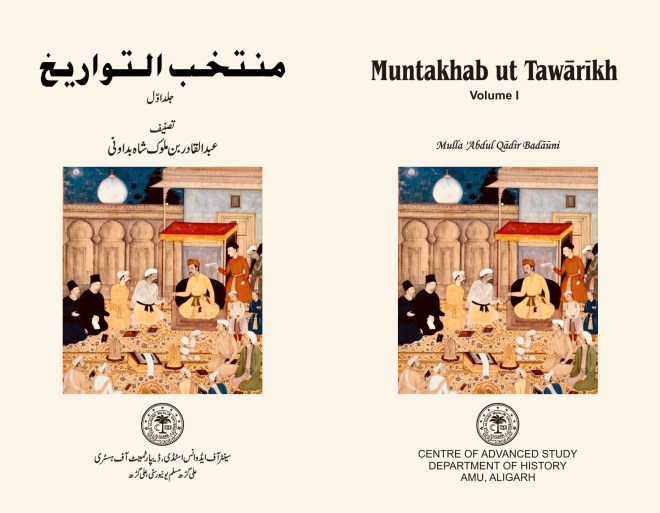
The Centre of Advanced Study Department of History has recently reprinted the Persian text of Muntakhab ut Tawārīkh which had earlier been published during late 19th Century from Calcutta. Since more than a century it is not available to the public being out of print since long. No publisher was ready to take up it’s reprint as, according to them, it had no “market”! It wouldn’t sell! Thus we took up the challenge. All the three volumes have been printed afresh in collaboration with the Publications Division, AMU. I am really thankful to the former Director Sir Syed Academy and Incharge Publications, Professor Tariq Ahmad, and his Deputy, Dr Husain Haider for facilitating the publication of all the three volumes. I am also thankful to the present Director & Incharge Maulana Ali Muhammad Naqavi.

Thanks are also due to Professor Emeritus Irfan Habib for agreeing to write a fairly detailed and thoroughly researched Introduction to the text. It adds to the value of this edition of the Muntakhab ut Tawārīkh.

Here I present to you my analysis of Badauni and his history.
***

Mulla Abdul Qadir Badauni’s work is a history of the Muslim rule in India from the Ghorian invasion down to the end of Akbar’s reign written from a religious bias. Thus in this work, the history of Akbar’s reign is written from the orthodox Sunni point of view. Naturally it tends to become a critic of Akbar’s policies based on principles of Sulh i kul. This kind of version with such bias is important and useful in our study of the political history of the reign as it serves as a balancing narrative to the account furnished by Abul Fazl in the Akbarnama, which as we know, is an account written with a bias to justify Akbar’s policies that were framed in the light of the policy of Sulh i kul. It is also written from the point of view of projecting Akbar as an insan-i kamil whose mission was to establish peace amongst people, unity of purpose in the state, and extend state patronage to a large group of people.

This view forwarded by Abul Fazl stands corrected by the sharp criticism which Badauni offers for the policies of Akbar.

We know from the notings which Badauni had made in volume III that he completed the book in 1004 AH / 1596. But the work could come out in the public only around 1616. For about twenty years after its completion, the book was not released for circulation. It is understandable why Badauni was hesitant to have it circulated during his lifetime. He knew if the book went into circulation, it would attract hostility of the Mughal authorities. We may assume, it was not in circulation till 1614, at least on the basis of the fact that in the list of different sources available, say that of Abdul Baqi Nahawandi (Ma’asir-i Rahimi), the name of Muntakhab ut Tawarikh is missing – a significant negative piece of evidence pointing towards the fact that till 1614-16 this was not in circulation. Subsequently, when the book did come in circulation, Jahangir made enquiries about the hostile remarks against his father.

Thus it was not for the perusal of the King. His style as a result, is not constrained by any fear of punishment or reprisal.

So far as the structure of the book is concerned, it is divided into three volumes. The first volume deals with the history of the Muslim rule in North India from the Ghorian invasion down to the end of Humayun’s reign, i.e., 1556.

An internal examination of the book reveals that Badauni derived information from two sources: the Tarikh-i Mubarakshahi (Yahya bin Ahmad Sirhindi) and the Tabaqat-i Akbar. For the later Sur period, Badauni bases on personal information and partly on information available to him through other sources.

Badauni’s account of the Sur Empire, for the period between 1553-56 is very significant and original. This is the only detailed account we have which gives the political developments under Adil Shah Sur and others who put forward their claims to the Sur throne.

The second volume of the Muntakhab deals with the history of Akbar’s reign down to the 40th RY (1595). The last event which Badauni records in this volume is Faizi’s death which took place in 1595. He adds a cruel note to this event.

The third volume comprises a large number of biographies of the mashaikh, ulema, physicians and poets: he gives biographic details of 38 important mashaikh, 49 leading ulema, 15 reknowned physicians and 167 well known poets of his own time. For this he borrowed much material from the Tazkiras of the poets that were compiled by Alauddaulah Qazwini as part of his Nafais ul Ma’asir.

Badauni, as against what his name suggests, did not hail from Badaun: he hailed from Kota Bhim in Rajasthan, which at that time was included in the Kachhwaha principality of Amber. He was born in 1541. His father, Muluk Shah, shifted to Agra in early 1550’s and stayed there down to 1561. It was after 1561 that the family shifted to Badaun and settled there.

Abdul Qadir Badauni received his early education at Agra under Shaikh Mubarak, who was at that time, known for his learnings towards Mahdavism. For some time, he also studied with Miya Hatim Sambhali, an orthodox teacher of early ‘60’s.

Badauni had become accomplished in a number of arts and sciences. In a letter written by Faizi to Akbar regarding Badauni, it is stated that he was proficient in history, astronomy, art of qir’at, music – especially Indian music and was a player of bīn. He also had expertise in chess. So Badauni was not only an ālim but otherwise also he was an accomplished person. Badauni himself does not refer to his proficiency in chess and music while writing his book.

So far as the history of his service career is concerned, he took up service under Husain Khan Tukriya in 1564, in which he continued down to 1574. In 1574 Badauni entered the Imperial service as the imam of the army for one of the days of the week. He was appointed to this minor position simultaneously with the appointment of Abul Fazl who took up the same position.

In fact Badauni laments that while Abul Fazl used flattery and readiness to agree with superiors to rise to the position of a high noble – a position which Badauni did not, as he did not worry about worldly gains. His bitterness is obvious in this statement. It is obvious even in vol. III when he writes about Abul Fazl and Faizi.

So far as the significance of the Muntakhab ut Tawarikh as a source is concerned, the problem has been discussed in at least three modern writings:

a. Elliot’s Introduction on Badauni with his translation.

b. Prof Muhammad Mujib’s paper in the edited work of Prof Muhibbul Hasan published from Jamia.

c. Discussion of Badauni’s approach to interpret history of Akbar’s reign by S Athar Abbas Rizvi in two of his works, viz., Muslim Revivalist Movements and the Intellectual Life under Akbar.

Still, here one would like to highlight some aspects of Badauni’s approach in interpreting Akbar’s reign missed in the above mentioned works.

A serious contradiction seems to have run through the entire narrative of Badauni in volume II & III of his work. This contradiction is that he gives conflicting assessments of Akbar as well as his policies and the role played by persons close to Akbar. Such contradictions are found within different parts of volume II itself as well.

We find that while at most places in volume III – and in certain places in volume II – Badauni refers to Akbar with great respect. He calls him khalifat uz zamān. But then on the other hand, in the major part of volume II, from 1575 onwards, he seems to be so annoyed with Akbar that he does not refer to him with name. He is found levelling charges in this part and he seems to have forgotten his respectful attitude depicted elsewhere. He charges Akbar of prohibiting namaz of the Muslims – a charge which on face appears to be unsubstantiated. He also accuses Akbar of forcing ulema to shave their beards; of enslaving ulema and mashaikh in large numbers nd exchanging them with horses and donkeys in the markets of Qandahar and Bhakkar. He also alleges that Akbar tried to impose ban on the learning of Arabic language. In general, in this part, he shows his disrespectful attitude towards Akbar. So one can very well see that the author had described the same person as a khalifat uz Zaman and, as a heretic.

Then there are other specific cases of contradiction: for example, the manner in which he assesses the role of Shaikh Salim Chishti in volume II and then in volume III. In volume III, when he gives a biographical sketch of the Chishti saint, Badauni gives a positive assessment of Salim Chishti’s character from the Islamic point of view.

But then in volume II, Badauni says:

And such was the disposition of that paragon of excellence, His Grace, the Shaikh, that he allowed the emperor entry to all his most private apartments, and however much his sons and nephews kept saying ‘Our wives are becoming estranged from us’, the Shaikh would answer, ‘There is no dearth of women in this world, since I have made you Amirs, seek other wives, what does it matter?’

(verse) Either make no friendship with an elephant driver,

Or make a house fit for an elephant.

The assessment of Shaikh Mubarak and his beliefs is given in volume III and II.

In volume II Badauni says that at one occasion Shaikh Mubarak told Birbal:

‘Just as there are interpolations in your Holy Books, so there are in ours. Hence it is impossible to trust either’.

Could this be said even by a ‘bad’ Muslim?

But then in volume III, Badauni contrarily noted:

He (Sh. Mubarak) was one of the great sages of the age and was distinguished amongst men of his time for his piety, devotion and trust in God. In early life he observed many austerities and strove much in the way of holiness and was zealous in enforcing commands and prohibitions of the Holy Law that if any body present was wearing a gold ring, or silk clothing, or red hose or red or yellow garments, he at once made him remove them, and if anyone appeared with long breeches, descending below the hell, he immediately had them torn to proper length.

Badauni accuses him of joining heretics, but does not charge him of being an apostate. Thus he says:

…and the pity is that his love of the world with its pomps, concealed under the garment of hiding poverty, left no room for the love of faith of Islam. [III, 120]

Similar contradictions are there about Shaikh Faizi: In volume III he has abuses reserved for him. At one place he acknowledges that favours were done to him by Faizi by giving him letters favouring him and introducing him. But then at other places, he makes fantastic accusations against Faizi: says Faizi’s poetry was not appreciated by contemporaries and his books were not considered as worthy by literary people.

Lastly, let us quote one observation about Faizi which he made while giving the biography of Shaikh Abdul Haq Muhadis Dehlavi and his great affection for Faizi:

Glory be to God! Shaikh Faizi has passed away and become a by-word; and as far these, the mention of whom is still among us for a few days, or rather for a few hours, who are they that we waste time in addressing them where preparation is even now being made for our departure hence? All that remains to them is the wind of speech. How long shall we waste our time in measuring it?

From these examples, it becomes evident that

(1) Badauni had more unbalanced views and assessments of contemporaries when writing volume II.

(2) The nature of criticism in volume III is sometimes qualitatively different from the kind of accusations in volume II.

(3) In the volume II the views are more balanced.

This goes to suggest that most probably Badauni compiled volume III at a time when he had not yet developed that kind of imbalanced view of the situation reflected in volume II.

At the end of volume III, treated by us as the final volume, Badauni says, it was compled in 1595. In the light of inferences drawn from the internal evidence, we would be justified in making the bold suggestion that the volume treated as volume II was compiled by Badauni after 1595 (that is, after volume III).

It is significant to note that at the end of volume I, Badauni actually has given an epilogue in which he states clearly that it was his plan to write the next volume comprising the biographies of contemporary poets:

Should this inconsistent and transitory life give (the author) a few days respite, and should the days in opposition to the usual habit afford assistance and should fate give its help, he (i.e., Badauni, the author) will make mention of poets of former times and of the contemporary poets of Hindustan, especially of those whom he had seen or heard or appreciated in his own lifetime together with extracts from their poems included in the tazkiras.

What, through these internal evidences we are trying to suggest and establish is that most probably, the volume which is now considered as volume II, containing the history of Akbar’s reign, was written sometime after the completion of History of Muslim Rule from earliest time in Humayun’s reign, and also after the penning of the biographical sketches of the contemporaries in volume III.

Perhaps Badauni compiled this second volume at a time when his assessment of the situation had undergone a considerable shift since the time he had completed the other two volumes.

This is borne out by the contradictory assessments that he gives of Akbar’s policies, Akbar’s character and the role of contemporaries in the two places ~ the second volume and the first and third volumes. It seems that by the time he started finalising vol II, his views had become rather extremist. By that he had come to the conclusion that the position of Islam in India had become untenable due to many factors including Akbar’s policy, and he was trying to put it straight by apportioning the blame of the catastrophe.

But then, in vol II as well, we find that in the first portion, he is not having an alarmist position which he has in the second half. In the portion relating to the post 1574-75 period, his views are most extremist.

In the first part of Vol II, he is calling Akbar as Khalifat al zaman, while in the second half, he charges him of heresy. This gives an impression that the account presented in Vol II is based on some journal which he maintained reflecting his changing assessment of the situation when he is becoming extremely critical.

His unbalanced attitude and state of mind is reflected in vol III also when he tries to revise and appends additional paras in individual biographies. To give an example: in the biography of Shaikh Mubarak, when he is beginning, he is praising and is not critical, as in the last paragraph which seems to have been added afterwards when his views had radically changed.

Then he also gives a number of chronograms giving dates of important events.

Thus in 1562, Pir Muhammad Khan Sherwani died during a campaign in Malwa by drowing in Narbada. Badauni writes:

“ba rāh-i āb ba jahannum raft”

When Muzaffar Kahn Turbati (a Khurasani) was appointed as the wakil in 971 AH, the fact is given by Badauni by the chronogram “zālim” (971) [oppressor]. Similarly on the death of Shaikh Gadai Kanboh, the sadr: murda khūk-i kalān [You are dead you great hog!]

When in 971 Ah, a certain Qazi of Baran was given capital punishment, Badauni found the chronogram of this event as “qāzi lāl”. And when Shaikh Ibrahim Chishti of Fathpur Sikri died in 999 AH, Badauni wrote that “since he was noted and notorious for avarice and vice, and was accursed”, his chronogram found was ‘Shaikh laīm’ [ “Base of disposition” or “Vile Shaikh”].

On the death of Urfi Shirazi, the famous poet the same year, he uses the term dushman-i Khuda.

Similarly on the execution of Ali Quli Khan Uzbek Khan-i Zaman and Bahadur Khan, after their rebellion in 1567 (974 AH), one of the chronograms found was “qatl-i du namak harām be dīn”

Incidentally all these persons were Shias.

One can see that all these chronograms have a common quality of being cruel, pungent and in bad taste. Badauni doesn’t say that they were compiled by him but it is obvious that they are of him only, having the dame pungent effect as in his prose. Probably he composed them when he was preparing the journal which ultimately was used to draft vol II.

An additional indication of this journal being maintained by Badauni is supported by other evidences as well.

He is becoming more and more hysterical in denouncing Akbar. If he would have been such in the earlier period as well, it would have reflected in the earlier period as well.

It is true that Badauni was very orthodox, but what he had to say regarding the role played by the Mahdavi leaders during Islam Khan’s reign, shows that he not only had very great respect and admiration for them, but he also shared the harsh cricism which Mahdavi leaders were making of the orthodox Ulema. So far as his admiration for Mahdavi saints is concerned, it is borne out by the chronogram he gives of Shaikh Alai’s death in 978 AH: zikr Allah.

Regarding Shaikh Alai, he says:

“Shaikh Alai who was the most orthodox of the sons of Shaikh Hasan, the tablet of whose forehead was from early boyhood distinguished by marks of nobility and uprightness and evidences of a youth to be spent in the worship of God and in following the ordinances of the Prophet of God.”

Badauni also praises Shaikh Alai’s piety, his indifference to worldliness and goes on to reproduce with much gusto and glee the denunciation of Makhdum ul Mulk Abdullah Sultanpuri by Sh. Alai at Islam Shah’s court. He puts the following words in Sh. Alai’s mouth in his vol I:

“You are one of the learned men of the world, a thief of religion, and you are engaged in so many illegal practices that you have put yourself outside the pale of equity so that even to this time the sound of pipe (nafiri: music) and tambur may be plainly heard issueing from your house, and in accordance with the true traditions of the Prophet, Upon Whom Be Peace and Blessing, a fly which settles upon filth is by degrees better than learned men who have made kings and emperors the object of their ambition and go from door to door.

Verse: Learning which exists for the sake of palace & garden

Is like a lamp to the loving thief.

This point is important from two angles: Badauni is not that sort of an orthodox as is generally conceived. He is espousing the cause of an Islamic sect regarded as heretic by majority ulema. This also helps us to see as to what was the source which influenced him in forming a very hotile and critical view of the contemporary ulema reflected in vol II where he says for the decline of Islam during his time, hypocrisy of orthodox ulema was as much responsible as the heretical views of Akbar and his advisors. In vol III he denounces ulema for the persecution of Mahdavis and writes about all types of discrepancies of the ulema.

It is much propagated that Badauni was a very intolerant person. At the same time, it is significant that when it comes to relating the role of Kachhwahas – Bhar Mal, Man Singh etc, he never uses that kind of hostile language which he employs for other nobles. He never uses an obscene language towards them. He also goes out of his way in condoning many of Akbar’s actions giving concessions to non-Muslims, especially those in which these actions and concessions are meted out to the Kachhwahas.

In 1576, when Man Singh was appointed as the commander of the expedition which was proceeding against Rana Pratap, Badauni decided to join it to fulfil obligations of jihad. Before he set out for Ajmer, one friend raised a question: ‘If you are really going from a purely religious angle, then how can you justify fighting under the command of a Hindu?’ Badauni was puzzled. Then he said that he had been appointed by a Muslim king, so it would remain a jihad! Shoot whatever side you want, all are non-Muslims.

Regarding Salim’s marriage to the daughter of Bhagwandas, he reports that the marriage ceremony was solemnised twice, first through Muslim, and then the Hindu rites: but he never makes any adverse comment, which is significant. Reason lies in the fact that Badauni had great respect for both Bhagwandas and Man Singh due to the fact that they refused to compromise their religion and accept the new creed that Akbar was trying to project. This is borne out by the approving manner in which he quotes two conversations, one between Akbar and Bhagwandas, and the other between Akbar and Man Singh.

When Akbar proposed to Bhagwandas to enrol as a member of Tauhid-i Ilahi, Badauni reports that Bhagwandas retorted:

‘I would willingly believe that Hindus and Muslims each have a bad religion. But only tell us what this new sect is and what opinion they (its members) hold, so that I may believe!’

Badauni then goes on to add: ‘His Majesty reflected a little and ceased to urge the raja!’

According to Badauni, the real culprits were those who sided with Akbar’s new religion based on principles of Sulh-i Kul, who were compromising their religion.

From this it is clear, his grouse was against those who thus compromised their faith and became a threat for the existence of Islam in India. He appreciated any one who was not impressed by the principles of the new belief.
The Yusufzai and Afridi Revolts during the Reign of Aurangzeb Alamgīr

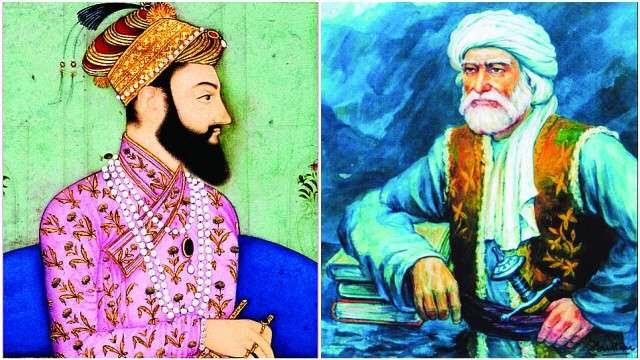
Portraits of Aurangzeb and Khushhal Khan Khatak

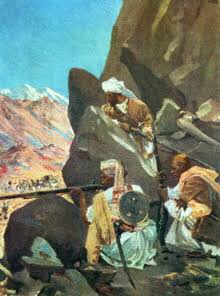
The Afghans inhabited the area between Peshawar and Qandahar. They were born soldiers and natural democrats. The mountainous region in which they lived had very meagre resources to sustain them, so their age-long profession was robbery. They used to plunder the plain areas and the caravans going to Qandahar from Peshawar.

They were divided into many clans like, Yusufzais, Afridis, khataks, Shiranis, Duldais etc. etc. Unlike the Rajput clan organization, the clan organization of the Afghans was weak in the sense that the individual would obey the leader only until it was in his interest. So the basic need of the society was the family.

It is also said that one of the saints of the area cursed the Afghans – in fact a blessing in disguise – that they will always be free but never united.

An attempt was made during the reign of Akbar to subdue the Afghans effectively. And the Mughal army consisting of 8000 soldiers and headed by Birbal, had been killed to the last man by the Afghans. Man Singh during the Battle of Ali Masjid had revived the Mughal prestige. Akbar’s policy of not attacking the caravans or disturbing the peace in that region and pay a subsidy to the Afghans in view of their meagre resources had continued during the reigns of Jahangir and Shahjahan.

After his accession, Aurangzeb stopped the subsidy being paid to the Afghans just to keep quite. But one should remember that there is no direct evidence for this subsidy being stopped or reduced; it is only a conjecture.

In 1667 the Yusufzais revolted and Aurangzeb immediately deputed Shamsher Khan to suppress the rebellion. Shamsher Khan inflicted a crushing defeat on the Yusufzais, but in some isolated incidents, Mughal outposts were also beaten back. Aurangzeb thus felt the need to send re-enforcements. Thus Muhammad Amin was now deputed. He took over the charge from Shamsher Khan and sent an army detachment in the main Yusufzai territory. Due to the hard blows inflicted, the Mughal army was able to suppress the Yusufzais. However, heavy casualties were suffered on both the sides.

There is another angle from which the Yusufzai uprising can be analysed. That angle is that Yusufzais were zamindars in that area and one will recall that it was during this period that the pressure of Jagirdar as Jagirdar on zamindar as zamindar had started. So apart from stopping the subsidy and following a vigorous policy by Aurangzeb, this was also a factor. There is no evidence that they revolted due to Jagirdar’s pressure. But two things are certain. Perhaps they were zamindars and perhaps they revolted as Jagirdars and not as zamindars. Yusufzais were Muslims and they were not agriculturists but nobles. So theirs was not a peasant uprising. It was not a Hindu reaction or a peasant rebellion. Their rebellion took place in 1667 and they were suppressed.

But in 1672, a serious crisis developed. That was the Afridis revolted. Bhagu, who was the leader of the Afghans invited different clans to join the uprising and called it a ‘National Uprising’. All joined in. At this time, Muhammad Amin Khan, the subahdar of Kabul, was coming from Kabul to Peshawar. Against the better judgement of his lieutenants and commanders, he carried on this path. They advised him not to proceed at this moment. He was the wealthiest man of the Empire and the son of Mir Jumla. He contemptuously rejected the sane advice of his commanders. Result was that the army of Muhammad Amin Khan was surrounded in the mountains and the stream from which he was drawing water was cut off. This cutting off of the water-supply resulted in a confusion in his camp. The Afghans attacked him from all the sides and rolled down stones on his army. The entire army of Muhammad Amin Khan perished and all his goods and cash of around 2 crores was plundered. With great difficulty he was able to flee himself. His daughter and wife were rescued from captivity by paying heavy ransom. His wife ultimately refused to come and became a nun in Central Asia.

Aurangzeb was extremely angry with Muhammad Amin Khan and he was transferred. But the result of the attack on the camp of Muhammad Amin Khan enhanced the prestige of the rebels and they started attracted recruits from all the directions. This posed a serious problem for the Mughal administration: the treasures which came into the possession of rebels attracted other Afghans over to them.

Aurangzeb realized the gravity of the situation and left for Hasan Abdal with a huge army.

In spite of the fact that the emperor was at Hasan Abdal and all the important commanders were there, Mahabat Khan was recalled from the Deccan. The main problem of Aurangzeb was that the army of the Afghans and the Mughals practically fought with the same weapons. Secondly, numerically the Afghans were superior to the Mughal army. Thirdly the Afghans were fighting in their homeland and were expert in the mountain fighting. Further, the Mughal soldiers were not very enthusiastic to fight in the broken terrain and the mountainous region. They were experts in fighting in the plains with cavalry which was most effective for them.

The strong point for the Mughals was their artillery: the Afghans were not experts in the firearms nor did they have en effective artillery. But then another weakness for the Mughals was that most of the Afghan fighters had served the Mughals and thus knew the weaknesses of the Mughal army.

Thus for about one year, Aurangzeb made all possible efforts to break the confederacy of the Afghans and used the famous sentence: ‘Breaking the bones by striking one against another’. The Mughal diplomacy also played its havoc along with the Mughal arms amongst the Afghan clans. Thus some clans broke from the Afridis and joined the Mughals.

Aurangzeb remained in HasanAbdal for one and a half years and ultimately succeeded in breaking the Afghan confederacy. The subsidy was restored and Amir Khan was appointed as the subahdar of Kabul. He also followed the policy and divided the Afghan clans against each other. A stage was reached that he became the arbiter between the various disputing Afghan clans.

In spite of the fact that the Afridi revolt was suppressed, it had important consequences for the empire. The most important consequence was that the best generals were withdrawn from the Deccan qnd concentrated in the North-Western frontier. Thus Shivaji got the chance to declare himself as the king as no force was left to stop him from his designs.

Secondly there was a lack of confidence between the emperor on the one hand and the Afridids on the other, with the result that the Mughal army was deprived of the Afridis who could have fought well. So the nature of the Yusufzai and the Afridi uprisings was different from the Jat, Satnami or the Sikh uprisings. The Yusufzai and Afridi uprisings cannot be explained in terms of agrarian or anti-Hindu policies of Aurangzeb. It had national overtones and at a moment gave the impression of a national uprising. Songs circulated which were composed by Khushhal Khan Khatak who had been in the prison of the Mughals. They had a national fervour appealing to the Afghans. Perhaps it was because of this that Aurangzeb spent 18 months at Hasan Abdal.

Coins of Aurangzeb: A Note

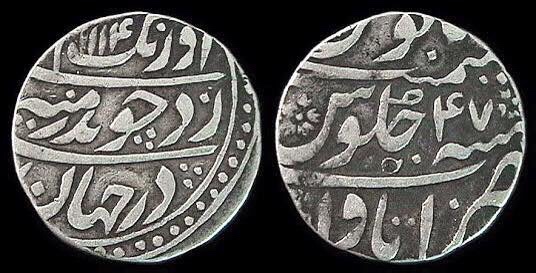
After coming to the throne, in 1659 A.D., Aurangzeb proscribed the use of the ‘Kalima’ on his coins. Accordingly the ‘kalima’ was withdrawn from the Indian coins. He established his own preferences on the coins that were issued during his ruling period.

The coins of Aurangzeb bore his name and title ‘Abu-al-zafar Muiuddin Muhammad Bahadur Shah Alamgir Aurangzeb Badshah Ghazi’ on the obverse side of the coin during the early years of his ruling period. Later he introduced a couplet which was composed by Mir Abdul Baqi Shahbai. The couplet came into use at different dates at different mints. Except from Akbarabad, the couplet was used by all mints and continued till the end of reign. The couplet was adopted by Akbarabad very late. The square area like Shah Jahan’s coins was used during the early years at Akbarabad and Junagarh. Aurangzeb introduced a separate formula, which carried ‘Sanh julus Manus zarb‘ with the name of the mint. The connotation of this phrase was “struck at (mint’s name) in the year (regnal year) of the accession associated with prosperity.”

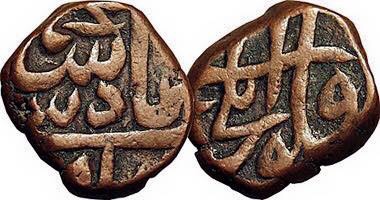
In comparison to the copper coins issued during the time of Shah Jahan and Jahangir, copper coins of Aurangzeb stood with a distinct characteristic. His coins were issued in the ‘dam’ (a small Indian coin) weight till the fifth year of his reign. As per the historical evidences, the weight of the coins was reduced perhaps due to the rise of the metal price during that time. Aurangzeb’s coins in copper bore on the obverse, variously, ‘Fulus Badshah (or Shah) Alamgir, Fulus Alamgiri, Fulus Aurangzebshahi, Aurangzeb Alamgir, Sikka Mubarak julus. The reverse side of the coin had the mint name. The largest number of places was known to have issued the coins of Aurangzeb. The places like Ahmedabad, Akbarabad, Akbarnagar, Azimabad, Bijapur, Burhanpur, Gulbarga, Hyderabad, Cuttack, Lucknow, Shahjanabad, Sholapur, Surat, Ujjain etc issued coins of gold, silver and copper metals. Moreover, copper coins were exclusively known from Aurangnagar, Bairat and Udaipur.

It had also been considered that the coins that were issued in some of these places were not the imperial issues but they had been issued by the local authorities without any imperial sanction.

The coins of Aurangzeb were noted for the distinct features he employed during his reigning period. Aurangzeb was followed by his successors for the inscriptions of their coinage.

They adopted uniformly on the reverse the formula ‘Sanh julus maimanat Manus’ with the mint name and the regnal year. There was a common pattern for the obverse, which began with the words ‘Sikka mubarak’ (auspicious coin) followed by the name of the king and ended in ‘Badshah Ghazi’. At times, the successors of Aurangzeb preferred to add some couplet on the obverse side of the coin in place of the set pattern of the coins.

Syed Sibtul Hasan Fazil-i Hanswi: Part 2

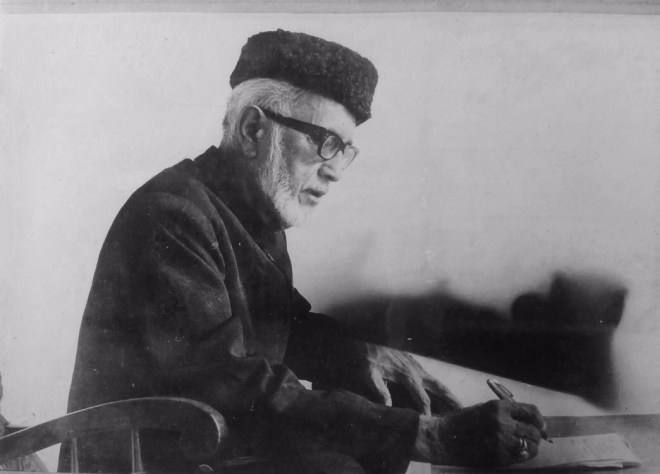
On 7th April 1978 around Maghreb, my father, Saiyyid Sibtul Hasan popularly known as Fazil-i Hanswi, left us all and returned back to his maker. The day is still fresh in my memory. I had just joined the University for my graduation. Being the youngest in the family, I was jealously shielded from the tremors of the loss by my elders, who never let a shadow of deprivation fall on me.

I had gone to fetch the ambulance from the Medical College when he passed away. It was only when I returned with the ambulance that I realised that he was no more. My sisters informed me that just minutes before his last breath, he asked to lie him facing the Qibla and asked them and my mother to recite prayers. My mother kept calling him and till his last breath he kept replying to them. He also told her not to worry as a large mansion awaited them both in the other world.

He had retired from service in 1971 and till 1978 when he left this world, he had been denied his pension. But just a week before, a team of Ulama from Irān had come to him, as they used to come earlier. Usually they would arrive at our house, offer prayers behind my father and then leave. But this time one of them had forcibly put ₹500/- in his pocket. And it was this money from his pocket which financed his shroud!

It was a general belief that he was one of the few who had had the fortune to meet the Twelfth Imam. Once when in late 1940’s he lost his way in the desert while heading for Mecca. The driver of the jeep, he and his friends were travelling in, lost direction. It was getting dark in the desert and they decided to stop for the night on a sand dune. Suddenly a man appeared and enquired where they were headed for. When informed that they intended to go to Mecca but had lost their way, he offered that as he was going the same direction he could lead them. He hopped on to the jeep and led them till a point where he asked the driver to stop. Hopping down he turned to my father and pointedly told him to convey his salām to his ancestor (jadd). And then he disappeared in the darkness after pointing out that they should go in that direction. My father used to say, that it occurred to none of the occupants of the jeep to inquire who this man was and why he was getting down in the middle of wilderness!

If one reads his diary, he had a number of such anecdotes connected with his life. But he would never boast of them nor easily narrate them to others.

His was a life totally devoted to Imam Husain and percolation of his message. Not a Friday in his life passed when he did not offer ‘amāl-i āshūr, not the shorter versions, but the full detailed vigil! In the evening after that he would hold a majlis, even if the participants were only family members!

In the procession of shab i āshūr ( night of 9th Muharram) he would himself through out hold the Alam. He would never refuse anyone who called him for the majlis, but would never agree to take anything in return except the exact conveyance charges.

I remember that when he would go for any meeting of the Mazār of Qazi Nurullah at Agra, he would travel by an ordinary bus and haggle for even half a rupee with the rickshaw wala. But when he would be traveling for some personal errand or taking us somewhere on holidays, he would pay whatever the rickshaw puller asked him for. Once I asked him the reason and got the reply:

“When I go for a meeting, it’s the money of the community which is involved! When we go on our own, it’s my money!”

He had not been a man of this world and the only material inheritance which he left me with was his library, and a thirst to read! Though a well known Shia divine, his readings were not confined to Islam or Shi’ism; he had a Hebrew Bible in his collection which he used to read. He was well versed with Ramayana and Mahabharata, and their philosophies. Having been brought up on the ghats of Banaras, he was well versed in the Hindu mythologies and he could even sing Alha Udal, when he was in the mood.

As a staunch religionist he taught me respect of all. The best way to attain the will of God, is through good behaviour with the people, irrespective of their faith!

Tolerance to him was the key to salvation: He would say:

‘Live like Ali, and die like Husain!’ Your intolerance should be against the Unjust and Injustice, he taught. He never bowed before any dictator or dictatorial attitude and taught me to resist them at all costs.

Thats what I have learned and practice- miss you Abba!

Qazi Nurullah Shustari: His first Biography and Portrait

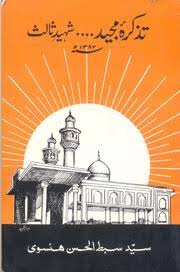
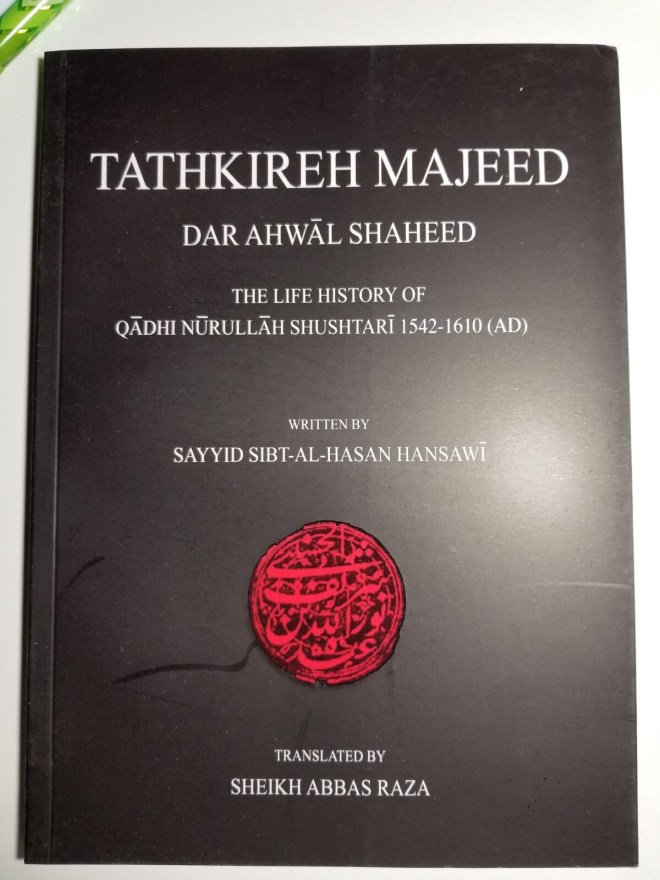
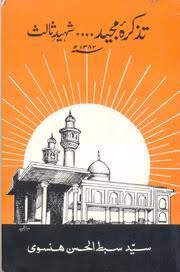
My father late Allama Saiyid Sibtul Hasan Fāzil-i Hanswi was the first to compile a biography of Qāzi Nūrullāh Shūshtarī. It is written in Urdu and is entitled Tazkira-i Majīd fi’l Ahwāl-i Shahīd. It was first composed in the form of a pamphlet published in early 1950’s which was soon expanded into a book. It has since then seen 6 revised publications, the last only a few days before my father’s death. Although written in the typical style of a theologian, it however has some footnotes and a large bibliography at the end. It is the first work on Qazi Nurullah which uses primary sources like Zakhīratul Khawānīn, and the work of Taqi Auhadi, as well as the letters of Qazi Nurullah, his son and other contemporaries.

Later on after the death of my father when the late Professor Athar Abbas Rizvi wrote a chapter on Qazi Nurullah in his two volume work on Indian Shias, he literally copied my father to a very large extent, referring only to the initial pamphlet and not the book which my father had himself given him. May his sins be forgiven!

I have heard that a few years back this book has also been translated into English by Sheikh Abbas Raza. I have just seen it’s title cover on the web. Hope one day it’s publishers do send me a copy!

When the book was going for its third edition, my father wanted to include a portrait of Qazi Nurullah which he had found and photographed at Delhi Fort Museum.

But the Shi’i ulema protested as the portrait of the Qazi depicted him as a nobleman, wearing an angarkha, with no beard and smoking a hookah. They wanted an image morphed by some Lucknow artists to be published instead: in this the beard and a “correct” dress with an ‘amāma’: a Shia black turban, was added for a right effect!

But my father would have none of it, so till date Tazkira-i Majįd has no image and this image remains unpublished!

The portrait of the Qazi since then has disappeared from Delhi Fort Museum and is unfortunately untraceable. What I have is an old unprofessional photo of the original and a copy of the morphed image.

What is the authenticity of this portrait? A noting on its border mentions “Shabīh Qāzi Nurullah”. He is shown wearing a Mughal jāma with a dark printed coat over it. His head is covered with a turban. He is depicted seated on a carpet smoking a huqqa (hubble bubble).

Incidentally tobacco and the hubble bubble were introduced in North India at the fag end of Akbar’s reign and became generally known only during the reign of Jahangir. Asad Beg Qazwini in his Ahwāl mentions that when it was brought to the court and Akbar wanted to try it, the ulama warned him not to as not much was known about it!

Qazi Nurullah was executed in 1610, that is merely five years after Jahangir’s accession. Was the Qazi actually ever exposed to huqqa? Very doubtful!

The sixth edition of the book can be downloaded here:

Tazkira-i Majīd

A Sermon of Imam Ali without Dots

In the Name of Allah, the most Gracious, the most Merciful

Following is a sermon by the Commander of the Faithful Imam Ali ibn Abu Talib (as) all Arabic letters of which do not contain any dots at all:

Praise to Allah Who is the praiseworthy, the affectionate owner of everything, the One who forms everyone born, the ultimate end of everyone who is expelled, the One Who spreads out the earth, Who firms the mountains, Who sends out rain, who facilitates the attainment of goals, Who knows the secrets and realizes them, Who destroys the possessions and annihilates them, who folds out times and repeats them, who causes matters and is their source.

His forgiveness covers all, His creation of the clouds is perfected: Rain showers succeed it. He prolongs pursuits and hopes, broadens sands and places them. I praise Him an extended praise, and I recognize His unity just as those who love Him the most recognize: He is Allah, there is no god for the nations besides Him, nor is there anyone to cause a defect to what he straightens and does. He sent Muhammad as a banner for Islam and an Imam for those who rule, a helper to the commoners and one who puts an end to the judgments of Wadd and Siwa’ (idols).

He knows and He informs, He rules and He perfects: He is the origin of origins. He [Muhammad] paves the path [to the Almighty] and emphasizes the Promised Day, warning about it. Allah has made honors to reach him, depositing in his soul Islam, blessing his honorable family and offspring so long as there is anything that shines like lightning, anyone who hurries his pace towards his pursuit, whenever a crescent appears and the announcement about it is made.

Do, may Allah look after you, righteous deeds, tread the paths of what is permissible, put what is prohibitive aside and abandon it, listen to the command of Allah and realize it, keep in touch with your kinsfolk and look after them, disobey your inclinations and curb them, give your daughters by way of marriage to the people of righteousness and piety, and stay away from the folks who sport and who covet, so your marriage ties will produce the most pure of freemen, the most eminent descent, those who will let you achieve your dreams.

This should be before your eyes, your domain will thus be rightful, your brides honored, and let her [bride] dower be just as the Messenger of Allah (ص) had paid to Umm Salamah, while he is the most honored of all in-laws, the most kind of all sons, and he had whatever he wanted, though having it was not easy, nor did it worry him, nor did his epics ever diminish, nor was he ever stigmatized.

I plead to Allah to grant you the most praiseworthy of connection with Him, the perpetuation of pleasing Him; may He inspire each of you about that which reforms your condition and prepares you for what you shall receive [in the Hereafter]. Eternal praise belongs to Him; lauding belongs to His Messenger Ahmad (ص).

***

خطبة خالية من النقطة:

هذه خطبة لأمير المؤمنين علي بن أبي طالب (ع) جميع حروف كلماتها خالية من ذكر “النقطة”:

بِسْمِ اللَّهِ الرَّحْمَٰنِ الرَّحِيمِ

الحمد لله الملك المحمود، المالك الودود، مصور كل مولود، ومآل كل

مطرود، ساطح المهاد وموطد الأطواد، ومرسل الأمطار ومسهل الأوطار، عالم الأسرار ومدركها، ومدمر الأملاك ومهلكها، ومكور الدهور ومكررها، ومورد الأمور ومصدرها، عم سماحه وكمل ركامه، وهمل، طاول السؤال والأمل، وأوسع الرمل وأرمل، أحمده حمدا ممدودا، وأوحده كما وحد الأواه، وهو الله لا إله للأمم سواه، ولا صادع لما عدل له وسواه، أرسل محمدا علما للإسلام وإماما للحكام، سددا للرعاع ومعطل أحكام ود وسواع، أعلم وعلم، وحكم وأحكم، وأصل الأصول، ومهد وأكد الموعود وأوعد، أوصل الله له الإكرام، وأودع روحه الإسلام، ورحم آله وأهله الكرام، ما لمع رائل وملع دال، وطلع هلال، وسمع إهلال. إعملوا رعاكم الله أصلح الأعمال، واسلكوا مسالك الحلال، واطرحوا الحرام ودعوه، واسمعوا أمر الله وعوه، و صلوا الأرحام و راعوها، وآعصوا الأهواء وآردعوها، وصاهروا أهل الصلاح والورع، و صارموا رهط اللهو والطمع، ومصاهركم أطهر الأحرار مولدا وأسراهم سؤددا، وأحلامكم موردا، وها هو إمامكم وحل حرمكم مملكا، عروسكم المكرمه، وما مهر لها كما مهر رسول الله أم سلمه، وهو أكرم صهر، و أودع الأولاد، وملك ما أراد، وما سهل مملكه ولا هم ولا وكس ملاحمه ولا وصم، اسأل الله لكم أحمد وصاله، ودوام إسعاده، وألهم كلا إصلاح حاله والأعداد لمآ له ومعاده، وله الحمد السرمد، والمدحلرسوله أحمد.

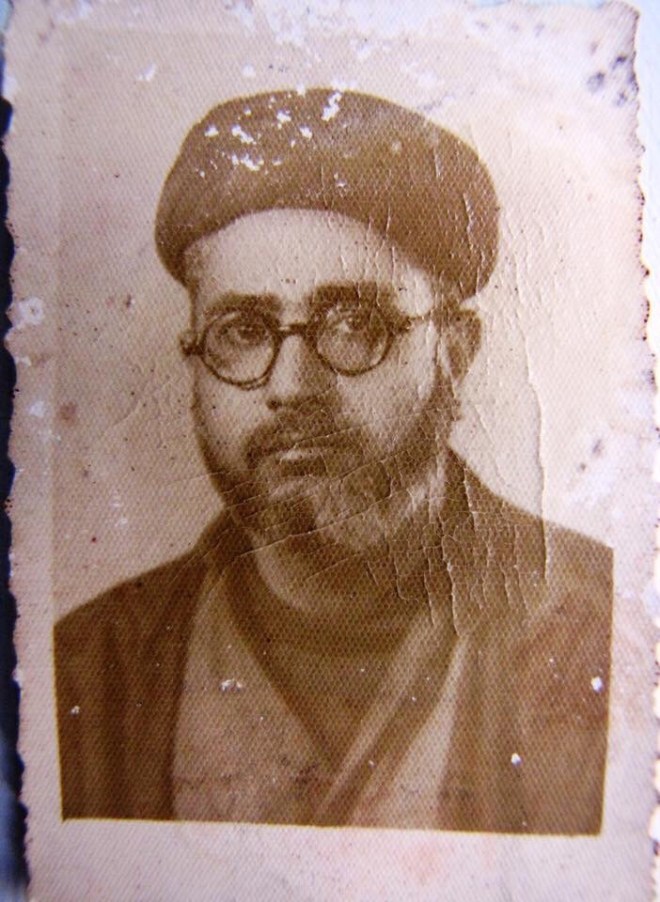
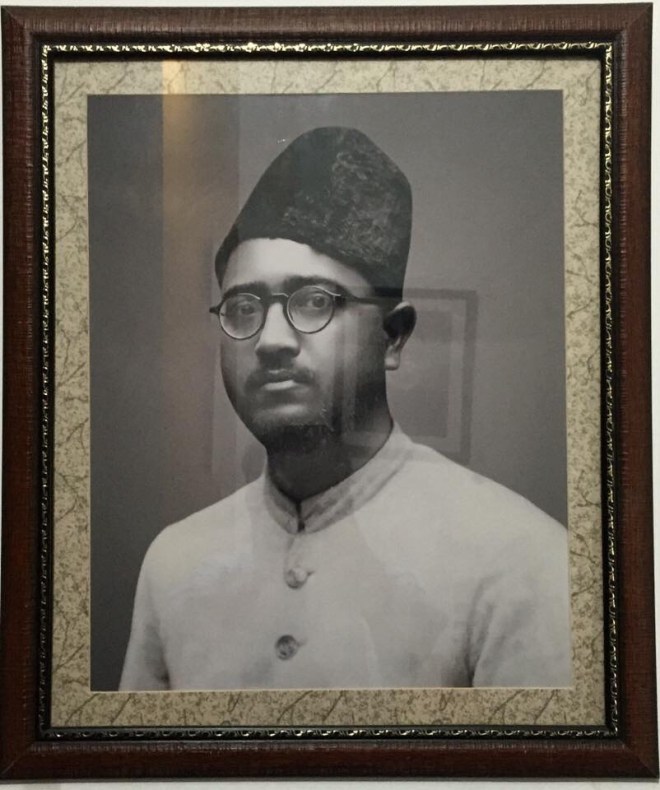
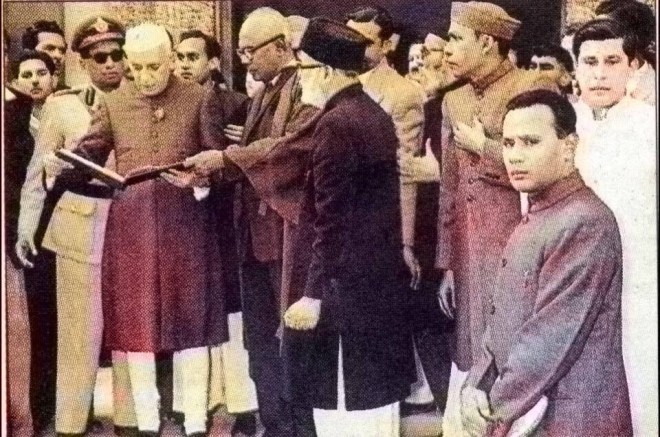
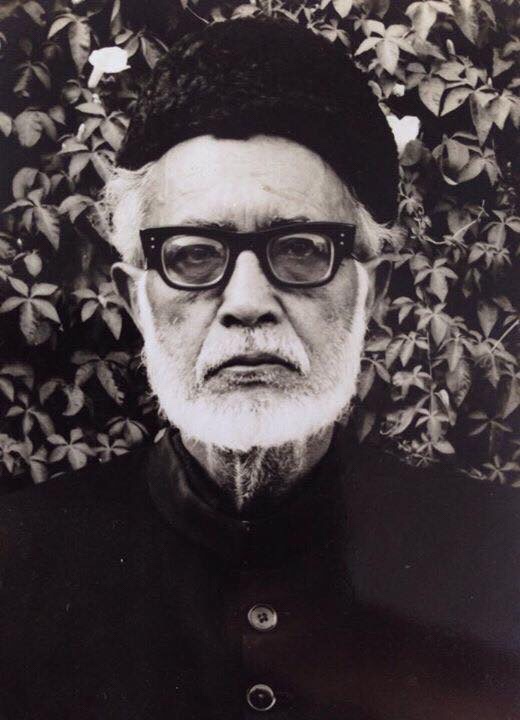
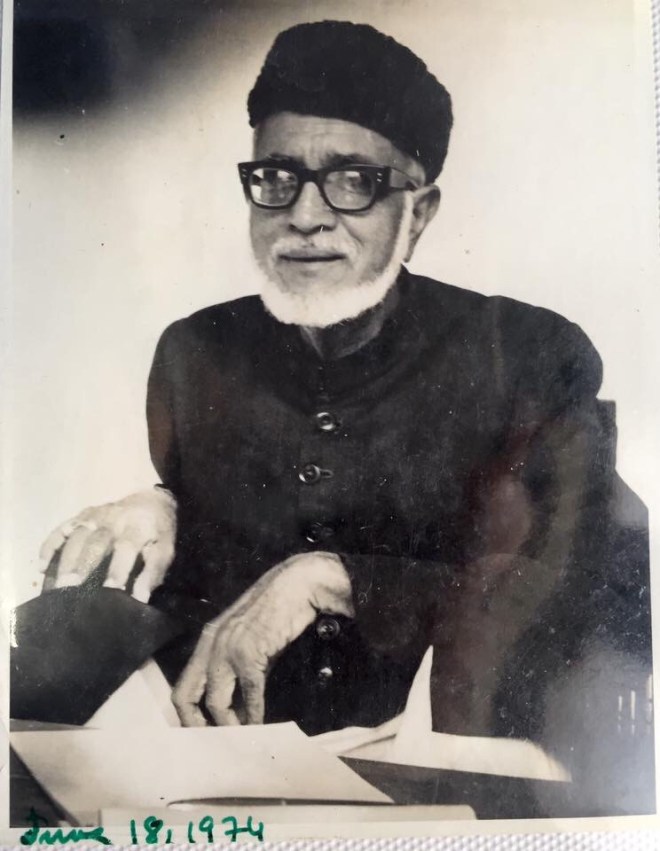
Life and Times of My Father: Allama Saiyyid Sibtul Hasan Fāzil-i Hanswi (12 December 1908 – 7th April 1978)

Today 7th April is the 43rd death anniversary of my father. In 1978 I had just joined the university after leaving school and was doing my BA (Hons) first year when Abba expired. He had been the author of 33 books and monographs apart from numerous articles.

Just a day before he bade farewell to us all, he had finished the fifth revision of his book, Tazkira-i Majid, the first biography of Qazi Nurullah Shustari. That day he was feeling relaxed and asked one of my sisters to bring his hand-written travelogue and asked us to assemble around him, for he was going to read us some portions from it.

“But Abba! We have already read it” I protested, least aware that this was the last time that he was ever going to read something for us. He ignored my protest and started reading his safarnama to the holy lands and how he sailed by ship and reached the vast deserts where he along with his friends got lost and how miraculously he escaped scorpion bite and a heavy crashing gate at an oasis and ultimately reached Mecca (or was it Medina?) with the help of a stranger-guide who then disappeared back into the deserts.

Syed Sibtul Hasan was born to Syed Faizul Hasan in 1908 (as per his passport) and as a child had been brought up in Benares where he also got his early education. He had lost his own mother at the time of his birth and had been brought up by his elder sister. His father married twice again but lost his second wife too to childbirth. The third wife of his father (Dadda, who survived my father a few months) was from Benares itself and was proud of the fact that she belonged to the family tracing its origins from the great Mughals.

Abba had three brothers (Aliul Hasan, Nasirul Hasan and Munirul Hasan) and three sisters.

Education and Early Life

Having been brought up on the banks of the ghats of Benares and being educated in an Arabic Madrasa under the tutelage of two very well known Shi’i theologians, Abba since childhood was a proponent of the Ganga-Jamuni tehzeeb. Apart from his own theology, he was well versed in Hindu philosophical traditions. He was at ease with both Quran and the Geeta. Nahjul Balagha, the collection of Hazrat Ali’s sayings and sermons was however his favourite book.

Abba started his teaching career from Ewing Christian College, Allahabad where he taught Arabic and Persian. Nurul Hasan, the future Education Minister of India was one of his students. He was possibly recruited in Ewing Christian College soon after he completed his basic graduating degree in Persian and Arabic: we have a group photograph of him in a group of teachers from the College dated 1934. In 1933 his course book for teaching Persian was published which was prescribed for the students of the same college of Allahabad. Another work, a compilation of extracts from various writers translated into Urdu was published for the college students in 1937. Both can be accessed on the Rekhta website (Sibtul Hasan)

Abba and Civil Disobedience Movement

At Allahabad Abba was gradually drawn into the ongoing freedom struggle and as a young boy had participated in the Boycott movement and the anti-Rowlatt agitation. He was one of the members of the Vanar Sena along with a young Indira. He turned into an ardent supporter of Congress and a follower of Mahatma Gandhi and Pandit Nehru.

As a result of his involvement in Civil Disobedience Movement, he was thrown out of his job. This is substantiated by the two books mentioned above: both mention him as “sābiq lecturer”. In 1933 he was sent to jail for some time.

By now he would not wear anything but khadi– a practice which he followed even after Independence.

Service in Mahmudabad and Visit to Karbala and Najaf

By late 1930’s he had settled in Lucknow where he also started taking active part in Shia political movement. Along with Maulana Nasirul Millat, MLC, the co-author of Abaqāt al-Anwār, and Saeedul Millat he went to Najaf, Karbala and Mashhad. At Najaf hauz-i Ilmiyya, he came in contact of Ayatollah Burujardi who gave him a diploma. He had a total of 18 ijāza (diplomas) from various marāje (top level Shi’i Mujtahids) of the age: a feat which very few Indian Shi’i theologians can boast of.

After his return to India, a few years before Independence, he joined service in the Estate of Mahmudabad where he looked after the state library. He was also appointed as atālīq (tutor) of a relative of the Raja, Amīr Imam. Though the Mahmudabad Estate and the Raja were closely linked with Muhammad Ali Jinnah and his Muslim League, Abba remained a staunch Gandhian and a Nehru supporter.

A Miraculous Dream and Return to India

According to the diary maintained by my father, when India gained Independence in August 1947, he was at Karbala in Iraq. When the news of Independence and Partition reached Abba, he was in a quandary where to go? His mother land where Muslims were being massacred? Or should he goto Pakistan, the very concept of which he had opposed? An influential and well-to-do Tanzanian offered him instead to settle in Dares Salam and become a prayer leader. Abba writes in his diary that, that he passed the night praying at the sepulchre of Imam Hussain and cried almost the whole night pleading the Imam that he did not want to make religion a profession. Oh Husain show me the way!

When after the morning prayers he reached his residence he found a man waiting. The man, named Abduz Zahra enquired: are you Saiyyid Sibtul Hasan? When he was told yes, he informed, “I have been asked to give this message to you: Go back to India!”

That very day my father writes, a letter from Nehru arrived requesting him to come back to India.

He thus returned back and settled once again in Lucknow.

Migration and Service in Aligarh

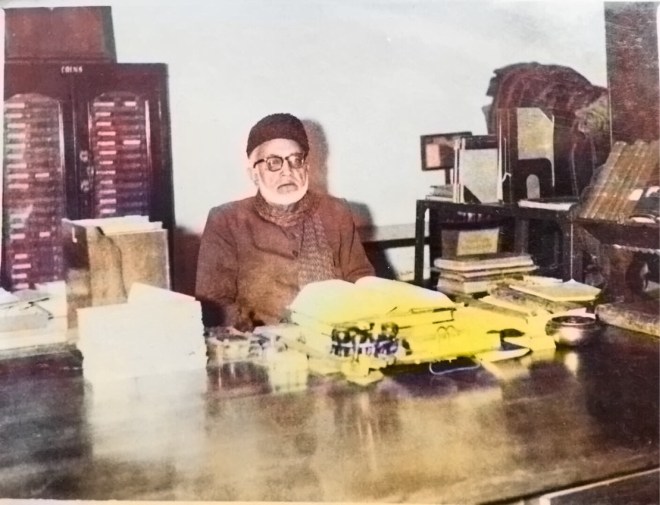
In 1953 at Lucknow, he received a letter from Dr. Zakir Husain, the then Vice Chancellor of Aligarh Muslim University regarding a vacancy in the university library. In 1954 Abba joined as an assistant librarian and was soon appointed to the position of an in-charge of a section which he helped create. His letter of appointment was given to him by Professor Mohammad Habib, one of the only two professors at Aligarh. Under his charge, he virtually built the Manuscript Section of the Maulana Azad Library and helped in acquiring, identifying and preserving a large number of manuscripts and related artefacts. A large number of manuscripts still carry the identifying explanatory notes in his hand writing.

Retirement and Ill-Treatment of AMU

Abba ultimately retired in 1971. The ungrateful university where he had served – the Aligarh Muslim University- inspite of all services rendered by him, denied him even his pension which he never got! Today he remains forgotten by the very institution which he helped build block by block.

I remember him climbing stairs at the Victoria Gate where the Registrar’s office and VC office then was, with his papers for the release of what was his due. I also would sometimes accompany him. On one such occasion, one VC while holding his application upside down pretended to read it! During my own suspension by another “learned” Vice Chancellor, when I would get depressed, my father’s plight helped me gather my senses! If he could be made to suffer after all that he had done, who was I? It is for some reason indeed that some people call Aligarh as Kufa!

Academic Contributions & Publications

He was a scholar par excellence: the Shah of Iran respected him. His letter to the Shah helped many to get their desires fulfilled. In his collection one finds letters which Ayatollah Khomeini wrote to him.

When I went to Teheran in transit to Dushanbe in 2002, and went to Teheran University for the Friday Congregation, the Ayatollah on hearing that I was Fāzil-i Hanswi’s son, kissed my hand and exclaimed how lucky I was to be the son of this revered being!

During his lifetime Abba wrote around 33 scholarly books in Urdu. Amongst his most important works are Minhāj-i Nahjul Balāgha, al-Kutub wal Maktabāt, Tārīkh-i Azådāri, Tazkira-i Majįd, Arabi Marsiye ki Tarikh and Izhār-i Haqīqat. He also penned a large number of articles published in various Urdu journals.

The Minhāj was a work of its kind. It was a refutation of the view that Nahjul Balāgha was not a work of Imam Ali. The Kutub, on the other hand is the history of Books and Libraries in Islamic world, especially India. Tarīkh-i Azādāri, as the name suggests is a history of commemoration of Imam Husain’s martyrdom in India. Tazkira-i Majīd was the first ever biography of Qazi Nurullah Shustari attempted anywhere. It not only provides a life sketch, but is one of first such biographical accounts based on original sources. When S Athar Abbas Rizvi wrote his biography of the Qazi, he merely copied from this work.

Video of a Seminar in Qom on Tazkira i Majīd

Abba and Naqqan Sahib: The writing of Izhār-i Haqįqat

In 1950’s a great turmoil was caused in the Shi’i world through the writing of the first edition of Shahīd-i Insāniyat by the renowned Shi’i scholar, Allama Syed Ali Naqi Naqavi, better known as Naqqan Sahib. In this first limited edition of the book which was soon withdrawn after the furore it caused, there were passages where it was claimed that there was no paucity of water in Karbala and that Imam Husain, in fact, had a bath before he went to the battlefield. Later the author explained that it was not his own view but was citing someone else. The critics, amongst whom this work was distributed found many other contentious issues as well. One of the first authoritative, academic and detailed refutation of this work was my father’s Izhār-i Haqīqat.

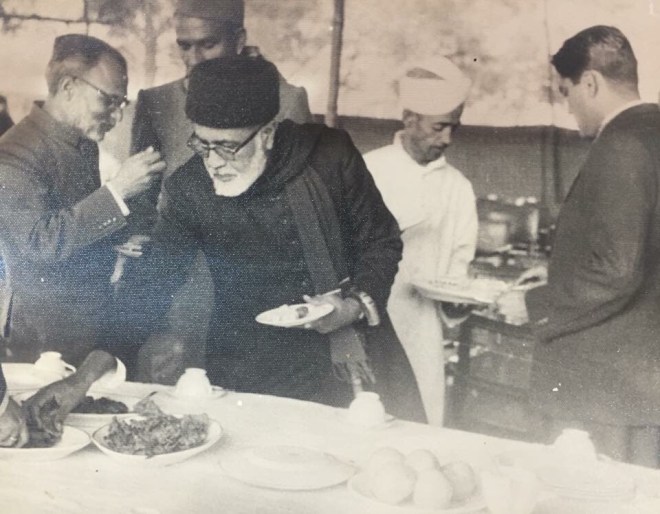
The relation which my father had with Naqqan Sahib were purely academic: Both would visit each other, attend each other’s majālis and exchange pleasantries in spite of their different theological positions. Most days Naqqan Sahib would sit in my father’s office in the Manuscript Section and read the unpublished and published books. They would also discuss the new works they had read that day. Unlike many “anti-Naqqan” or “pro-Naqqan” protagonists ( the whole Shi’i community was those days divided into these two camps, with no social or marital relations) my father always respected him, and he respected my father.

Once I remember walking down from our house when we encountered Naqqan Sahib coming back from the library. After the exchange of usual pleasantries, Naqqan Sahib said “Maulana be ready with your reply, I am writing something on Hazrat Ali Asghar!”. My father coolly replied, “Do write, I am ready!” And soon Naqqan Sahib’s article on the martyrdom of Ali Asghar as an unfortunate accident was published. The very next week my father’s reply to it was out!

Abba and Azādārī

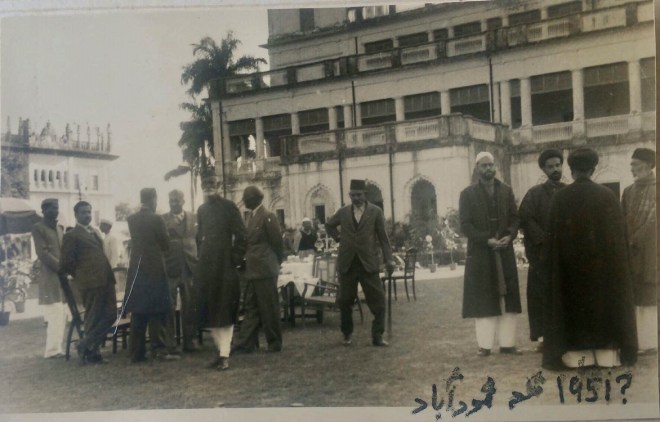
Fāzil-i Hanswi also had a great role to play in the establishment of Muharram commemorations (azādāri) in Aligarh. The first public ashra (10 day majālis) in Civil Lines after Independence and the first Alam procession (on the night of 9th Muharram: Shabi-i āshūra) was started by my father in 1954-55. Before that only two closed door majālis would be held: one in the Kothi of Raja of Asgharābad (Mahmud Manzil), the other in Shamshad Market at the house of Mansab Raza Sahib (father in law of Professor Tasadduq Husain).

Death

My father died on 7th April 1978. In 1973 he had had a heart attack and a valve had been damaged. He also suffered from an acute bronchitis which had been caused due to accidental exposure to toxic fumes during a fumigation of Manuscripts in the Maulana Azad Library. He died of heart failure.

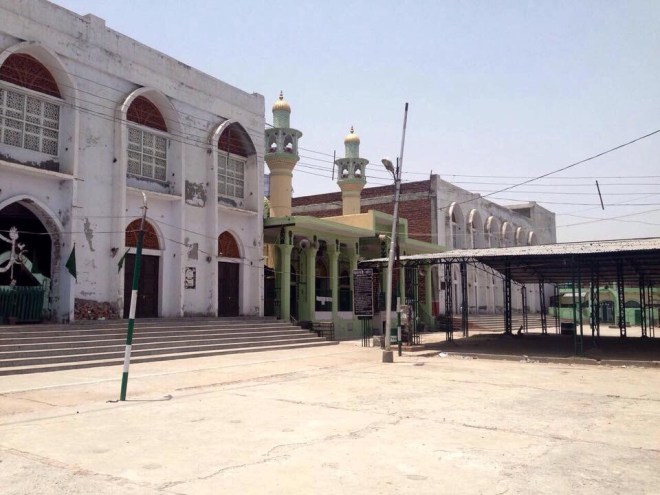
But as before his death, he had expressed his reservations about Aligarh, we took his bier to Agra at the Mazār of Qazi Nurullah Shustari, the building of which had been constructed under his directions. For decades he had been it’s mutawalli and the Honorary Secretary of the Society which was managing its affairs.

His dedication to the place had been such that a couple of years before his death, when someone handed him a brief case full of currency as nazrana, despite of his very poor economic conditions, and despite the man’s protestations, he directed the gentleman to deposit it in the safe of the shrine!

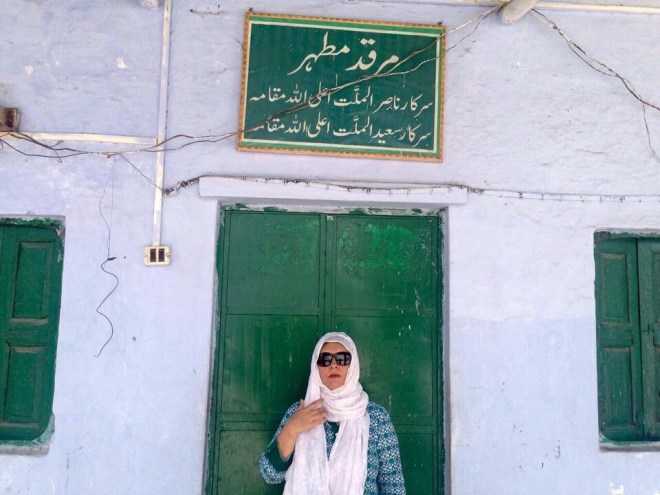
Abba was buried in a room which housed the graves of his closest friend, Maulana Saeed ul Millat and that of his father Nāsirul Millat.

Miracle of the Grave

When I buried my father I thought I had seen him for the last time. But then after burying my father at Agra near the grave of Qazi Nurullah Shustari on 8th April 1978, I was able to see him again 19 years later!

On 1 July 1997 I was informed his grave had caved in. When I reached there I found a body within the grave. Suspecting foul play, I entered the grave and lifted the shroud: my father lay there, as if asleep! Not an extra wrinkle! Though having been in the field of history and archaeology, I knew of instances before when body had been preserved, for me, given the character of my father, it was nothing but a miracle!

I believe Abba you are ever there looking after us! God bless you! Rest in Peace!

A Hypocrite or a Blatant Plagiarist?

A scholar is a person who has no contradiction in what he says or writes. But if a person writes one thing but when delivers a speech, says just the opposite, then he is no scholar or ‘alim, but an opportunist! Dissimulation when allowed is only in conditions where life is in danger, and not in case of political or economic aggrandisement. Such a person divides people and communities, and thus is a danger to society at large!

Secondly, it is an accepted fact that if a scholar gives the opinion of somebody else, the person being cited is duly acknowledged. A reference is made to that original scholar and the work from where the material is being lifted is cited. If not then instead of being called a scholar, he is labelled as plagiarist! And if a group is formed around such a “plagiarist”, it is called as an axis of evil and fraud. A confirmed Plagiarist is one who when caught would grudgingly accept that what he wrote was a blatant copy of what some other person wrote!

Such persons are not to be applauded but discouraged: even if they have the largest turban over their head!

There is a saying of Imam Ali:

Do not see who is saying; see what he is saying!

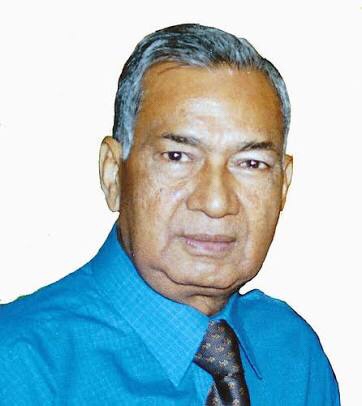
Professor Ahsan Jan Qaisar (1929-2011)

Born in Chhapra (Bihar) on 30 December 1929, Qaisar Sahib did his graduation and post graduation from AMU. He was a throughout a first divisioner and stood first both in BA (Hons) and MA History.

Initially appointed as Research Assistant July 1961, he became a temporary Lecturer in November the same year, a post on which he was ultimately confirmed in 1963. In 1977 he got appointed as Reader in Economic History and then in 1986 as Professor of Economic History. He ultimately retired in 1992 after having served for 31 years. In between he was also a Visiting Fellow at Indian Institute of Advanced Study, Shimla during the session 1974-75. In 1977 he was on a research Fellowship to School of Oriental and African Studies, London. He also went to University of Wisconsin as a Fellow.

Academic Works

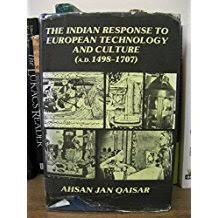
Qaisar Sahib wrote to books, viz The Indian Response to the European Technology and Culture, 1498-1707 (OUP Delhi, 1982) and Building Construction in Mughal India (OUP, 1988).

The first book deals with selective absorption of European Technology in India during the medieval period in fields like ship-building, armaments, metallurgy, cloth printing and architecture.

The second, on the other hand is an account of building constructional activity as gleaned from miniatures and primary sources.

Some of the papers of Qaisar Sahib are pathbreaking: for example his short paper on mansab, and the one the crisis at the time of Jahangir’s accession.

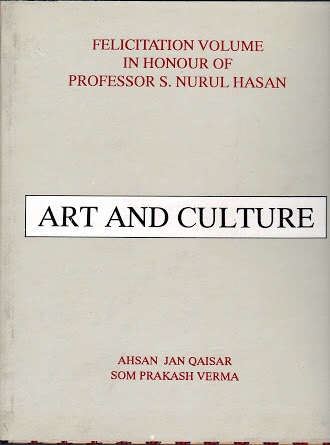
Later in life, he also jointly edited three volumes on Art and Culture along with his colleague Professor SP Verma. In the first volume, which was a felicitation to Professor Nurul Hasan, he also included one of my papers which was a survey report jointly conducted with late Rajiv Sharma.

Personal Reminences

My relationship with him was dual: he and his wife both had been my teachers! Mrs Zarina Qaisar, his wife had been my class teacher in Class III. He taught me when I joined MA History.

Zarina Apa (as we called her later) was a loving and soft spoken person whom we adored: I remember crying for days when she left school when we were in Class IV. He was curt, sarcastic and suffered no nonsense. When you went to his class he would first try to cut you down to size. He and Dr SM Raza Naqvi were really brutal in their first few classes. And if you survived these early classes, then you were in for an academic treat! What would follow was amazing and satisfying!

Qaisar Sahib used to stammer and thus his lectures were not the usual lectures. First he would write the names of the sources, then a list of important points, the debate and related controversies: all in the form of bullets. He would also give the name of secondary works. Next day or class, each of us was supposed to come after reading these sources and elaborate in the class. Thus you would actually read the books ensuring that you never forget. He would also check our term papers very meticulously and keep putting up question marks!

During those days our department – as always – was divided into two well defined groups. Qaisar Sahib would transcend both! He was neither here nor there. He was a pure and simple critic!

One day while he was taking our class, he took off both his slippers one by one while declaring: one may sit here, the other there! The result was that he was a lonely man!

One other thing which defined Qaisar Sahib was dedication to his subject and his students. He was thorough and meticulous in his research and a great help to his students!

When I was a student, we thought him to be an atheist, in fact a non-conformist and non-believer. But much before that he reportedly had come under the influence of Buddhism. In fact one of his sons he named Rahul! But after his retirement, he turned into an orthodox skull-cap wearing Muslim!

Which of his avatar was better, I don’t know!

I just know that he was a dedicated teacher, good scholar and a great man who left whom so ever he met, impressed!

The last days in his life we were next door neighbours. He lived in an ADA flat which he had bought in front of my rented house! He remained a recluse till the end.

He died in Aligarh on 15 April 2011.

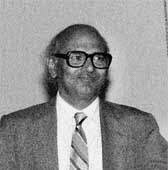
Professor M. Athar Ali (18 January 1925 – 7 July 1998)

Athar Sahib was one of the best teachers ever produced by Aligarh. A man of simple tastes and habits, almost rustic in a way, he had a knack to deliver lectures which none could ever forget! Although trained as a historian, there was an expert lawyer hidden within him. He would build up the arguments as a lawyer would build up a case, slowly but surely, leaving you mesmerised and fully convinced and satisfied. There was no way that a contrary argument would germinate in your mind till his words would keep on resonating in your skull – they still do in my head even decades after having heard him Lecture! In fact there were moments, when as students, I would prefer him over that doyen of historians, Irfan Habib, who in our understanding during those days was hard to follow and understand!

I was quite fortunate to have come in his contact much before I had ever studied history: in school I, like others of my age, was studying Science. To study history was infra dig and only those who could not cope with science used to offer it. Athar chacha, as I knew him then as a school kid in standard IV or V, was a stocky sherwani clad serious – in fact, severe looking – visitor who every year would bring to Abba (my father) an earthen pot full of rasāwal, and sometimes even gur and ras. He we were informed by Abba, was a raīs from Pilakhna, a qasba near Aligarh. I knew no more about him, nor was I ever interested.

And then when on the insistence of Sir Ahmad (the father of Professor Tariq Ahmad), and the recommendations of Professor Zillur Rahman (son in law of Zakir Husain, and Professor of Physics) I took admission in BA (Hons) History and went to a class where Medieval India was taught, I found him to be the teacher (the others were Irfan Habib, Iqtidar Alam Khan and SP Gupta). But now he was wearing a white shirt over very loose pants, and horror of horrors, he refused to acknowledge that he ever knew me!

He would walk in dot on time, rain or scorching heat, order the door to be closed and stop the Lecture the moment bell was sounded: not a second more, not a second less. His timings such that you may set the clock! He would never smile, and had this habit of citing “Truly Yours”. [Once when we were in MA, one of my classmate who later was to become a daughter in law of Professor Nizami, thought that “Truly Yours” was a proper name of some historian! And she did enquire about him from Athar Sahib: and that was the only moment I found his mask fall!]

Each and every word he would utter in the class would sink in and till date when I teach, those words and sentences come back to me as if they were uttered yesterday.

He first taught us Delhi Sultanate. We named him Balban! And then in MA he taught us a course covering Jahangir to Aurangzeb. His dealing with Aurangzeb was spectacular: he would grow with him, age with him, the victory parts were taught in a manner as if Athar Sahib himself had won, and the defeats were dealt equally. When he taught Shivaji, you could make out the contempt which he had for him! His most elaborate lectures however were on the religious policy.

Although he had a very hard exterior, he was very soft inside. There is an episode which I remember. When I was going to join research under Irfan Sahib, the latter warned me not to sit for civil services but only do research. Athar Sahib remained quite. But later he called me to his room, locked the door, and then advised me not to listen to Irfan Sahib on this point and prepare for IAS!

Once in an exam he had asked questions which I and my best friend of that time, Amjad Afridi, had not prepared. Both of us attempted a question which had not been asked. Athar Sahib got confused and awarded the highest marks to us!

He wrote a large number of pathbreaking research papers, quite a few of them unparalleled till date. However I find his paper on Akbar and Islam and that on Passing of an empire outstanding. Most of his pathbreaking papers have been posthumously been printed in a book form by the endeavours of Irfan Habib.

Entitled Mughal India Studies in Polity, Ideas, Society and Culture, this work has a preface by Irfan Sahib.

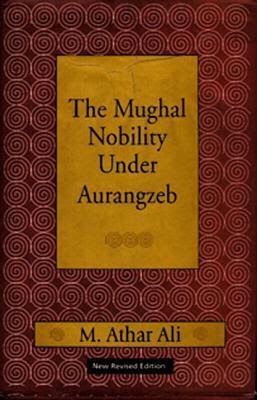
During his lifetime he had two important books published. His The Mughal Nobility Under Aurangzeb was published in 1966.

While his The Apparatus of Empire: Awards of Ranks, Offices and Titles to the Mughal Nobility, 1574-1658 came out in 1985. For this later work he was awarded the prestigious Badpujari Award.

Apart from this he was one of the four distinguished authors (the others were R.S Sharma, D.N. Jha and Suraj Bhan) of the Report to the Nation on the Babri Masjid, Ayodhya, 1990, which was published in many Indian languages and which was one of the first endeavours of Secular forces who were ultimately working towards the future demolition of the Babri Masjid. He alway not only stood for, but actively fought for a secular scientific history writing. And this is reflected in each and every of his book and article.

His absence would be missed for long, and in my view there is no other M Athar Ali to be born in near future!